
A peaceful waterhole can bring many animals together, creating moments that are rarely predictable.
One such scene unfolded when a lion approached a zebra near the water, turning an ordinary visit into an intense wildlife encounter.
As the two animals moved through the same space, every moment offered a glimpse into the natural behavior of the African savanna.
The zebra had come to the waterhole as part of its normal routine, joining the landscape where different species regularly gather.
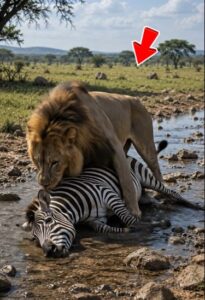
Nearby, a lion was also moving through the area, watching its surroundings carefully.
The presence of both animals created an atmosphere of uncertainty, with the zebra remaining alert as the lion drew closer.
Waterholes are important gathering places for wildlife, especially during dry periods.
Zebras, elephants, antelopes, birds, and many other species may depend on the same sources of water throughout the day.
Predators also know these locations well, making encounters between different species a natural part of life on the savanna.
As the lion approached, the zebra became increasingly aware of what was happening.
Its attention shifted toward the movement nearby, while the lion continued observing the area.
The scene demonstrated how quickly an ordinary moment at a waterhole can change when a predator and prey animal occupy the same surroundings.
The lion moved with the careful confidence typical of a large wild cat.
Rather than rushing through the area, it remained focused on the zebra and its surroundings. The zebra, meanwhile, stayed attentive and appeared ready to react to any sudden change.
For anyone watching, the encounter was a reminder that wildlife follows its own instincts.
Lions and zebras have evolved to survive in the same ecosystems, and their interactions are part of the natural balance of the savanna.
Human observers should always maintain a safe distance and allow these moments to unfold without interference.
The waterhole itself added to the unusual atmosphere. With open ground surrounding the water, there were few places for either animal to disappear from view.
The lion continued moving through the area while the zebra remained aware of its position, creating a scene that held attention from beginning to end.
As the interaction developed, the zebra looked for the safest direction to continue.
Its natural instincts and awareness of the surroundings became important, while the lion continued responding to the movement around it.
The balance between caution and movement was visible in every step
https://twitter.com/i/status/2088382947346763873
Leave a Reply