

A vintage beach photograph can awaken memories in a way that few modern images can.
The softly faded colors, natural film grain, and unhurried atmosphere immediately recall an era before smartphones, social media, and carefully edited vacation pictures.
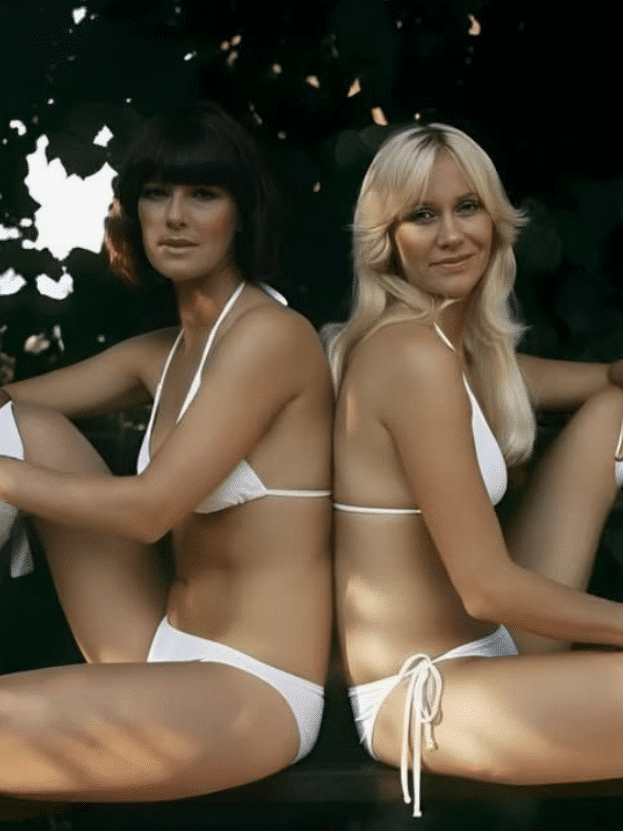
In this collection of archival-style images, two young women are seen spending time beside the ocean in simple white swimsuits. Their identities are not provided in the source material, but the scene captures many of the fashion and photography details commonly associated with the 1970s.
The photographs are not valuable because they present a single definition of how women looked during that decade. No small collection of images could represent an entire generation. Instead, they preserve one particular vision of 1970s coastal style—casual, sunlit, and refreshingly uncomplicated.
A Beach Scene From a Slower Time
The first thing many viewers notice is the apparent simplicity of the setting.
There are no visible phones, designer beach bags, or elaborate accessories. The ocean and sand provide almost everything the scene needs.
That feeling reflects the way many family vacations were remembered during the era. People packed towels, paperback novels, portable radios, coolers, and perhaps a film camera with a limited number of exposures.
Taking a photograph required a small decision. Film cost money, and every roll could hold only so many pictures. Families often saved those precious frames for moments they truly wanted to remember.
After the vacation, the film had to be developed. Days or even weeks might pass before anyone knew whether the photographs had turned out well.
That waiting gave pictures a special kind of anticipation that has largely disappeared from modern life.
The Relaxed Hair That Defined the Decade

The women’s soft, full hairstyles are among the most recognizable details in the photographs.
Throughout the 1970s, fashion increasingly favored movement and a less rigid appearance. Hair was often worn long, layered, feathered, or gently shaped around the face.
The goal was not always perfect control. A little movement from the ocean breeze could become part of the look.
Farrah Fawcett’s famous feathered hairstyle would eventually become one of the decade’s most influential beauty trends. Her flowing layers inspired countless salon visits and appeared in yearbook photographs across America.
Other women preferred center parts, natural curls, short shags, or styles influenced by the decade’s folk and countercultural movements.
There was never one universal “1970s hairstyle.” Fashion varied according to age, community, music, profession, and personal taste.
Still, the loose texture visible in these photographs fits beautifully within the period’s preference for hair that appeared touchable and free to move.
Swimwear Became Simpler and More Expressive
The white swimsuits in the photographs reflect another important development in 1970s fashion.
Women’s swimwear had changed significantly throughout the twentieth century. Earlier generations wore designs that provided more coverage and were often made from heavier materials.
By the 1970s, improved stretch fabrics made swimsuits lighter and better suited to swimming and sunbathing. Bikinis had become increasingly familiar on American and European beaches, even though styles continued to differ widely.
Some women chose modest one-piece suits, while others preferred colorful bikinis, halter tops, high-waisted bottoms, or increasingly minimal silhouettes.
White swimwear created a particularly clean and timeless appearance. Against blue water and sunlit sand, it offered a strong visual contrast without requiring complicated prints or accessories.
The style shown in these photographs feels connected to its decade, yet its simplicity also explains why similar designs continue returning to modern fashion collections.
Analog Film Created Its Own Kind of Beauty

Modern digital photography can preserve remarkable detail. A phone can take hundreds of sharp pictures in a single afternoon, and editing tools can adjust nearly every element within seconds.
Film photography worked differently.
The texture now associated with vintage pictures was partly created by the technical limits and characteristics of the equipment. Grain, gentle color shifts, soft focus, and changing exposure all contributed to the final image.
Sunlight might wash out one area while leaving another in shadow. Colors did not always appear exactly as they had in real life. A moving subject could become slightly blurred.
Those imperfections now feel deeply atmospheric.
They remind viewers that the photograph passed through a physical process. Light reached a strip of film, the roll was developed, and an image eventually appeared on paper.
Even the marks of age—a faded edge or a slight change in color—can add emotional depth. The photograph seems to have traveled through time before reaching us.
Not Every Picture Needed to Be Perfect
People certainly posed for photographs in the 1970s, and fashion photography could be every bit as carefully planned as it is today.
The difference was that ordinary people could not immediately review each image.
There was no screen displaying the result, no instant option to delete a picture, and no opportunity to take dozens of nearly identical frames until every detail looked perfect.
Someone might blink. The horizon could be crooked. Wind might move a strand of hair across a face.
Yet those unexpected details often became the most beloved part of a family photograph.
The beach images in this collection carry that unhurried feeling. Whether they were posed or captured between poses, they do not appear designed for an endless online audience.
They seem connected to a time when a photograph was primarily a memory rather than a public performance.
The Beach Was Part of a Larger Cultural Shift
Beach culture had become a powerful part of American entertainment well before the 1970s.
Movies, popular music, travel advertising, and television programs all celebrated the promise of warm weather and coastal freedom. The Beach Boys helped give Southern California life an irresistible soundtrack during the previous decade, while beach movies presented sunshine as an escape from everyday responsibility.
During the 1970s, that imagery became more relaxed and natural.
Fashion was influenced by multiple cultural movements at once. Some people embraced the earthy colors and handmade textures associated with the counterculture. Others preferred the polished glamour of disco.
Denim, flowing dresses, platform shoes, peasant blouses, and bold prints all occupied the same decade.
Beachwear offered an especially simple form of self-expression. A swimsuit, sunglasses, sandals, and a towel might be all someone needed for an afternoon by the water.
The ocean created an environment where formal rules could loosen and daily routines could briefly disappear.
The Everyday Reality Was More Diverse

It is tempting to look at selected fashion photographs and assume they show exactly how everyone dressed during a particular decade.
Reality was far more varied.
Not every woman in the 1970s wore a bikini or had feathered hair. Some followed trends closely, while others chose practical clothing influenced by work, family responsibilities, religious traditions, local customs, or personal taste.
Age and geography mattered as well. Beach fashion in California could look different from summer clothing beside a Midwestern lake or along the New England coast.
Department-store catalogs, sewing patterns, magazines, and local shops all influenced what people wore. Many families made clothes at home or adapted older garments rather than replacing wardrobes every season.
The decade also contained enormous social and economic differences that polished fashion photographs rarely captured.
These images should therefore be enjoyed as one attractive piece of the period—not as a complete record of every woman’s experience.
Memories of Summer Before the Digital Age
For readers who lived through the 1970s, the photographs may bring back details that have little to do with fashion.
They may recall the sound of an AM radio near the beach, the scent of sunscreen, the texture of a woven lawn chair, or sand finding its way into the family car.
Summer photographs might later be arranged in an album beneath transparent pages. Someone would write a place and year in careful handwriting, hoping the details would not be forgotten.
Those albums became records of more than vacations. They preserved friendships, relatives, favorite cars, changing hairstyles, and children growing taller from one summer to the next.
Decades later, even an imperfect photograph could return someone to an afternoon they had not thought about in years.
Why This 1970s Look Still Captures Attention
These vintage photographs show two young women enjoying time beside the ocean in the simple coastal style associated with the 1970s.
Their white swimsuits, softly styled hair, and the grain of analog film create an image that feels unmistakably connected to the era.
Yet the strongest source of nostalgia may be the absence of modern distractions.
The photographs seem to preserve a moment experienced for its own sake—before every outing became an opportunity to create, review, edit, and share content.
Fashion has changed many times since the 1970s, and it will continue changing. Simple swimwear and feathered hair may return, disappear, and return again under new names.
What cannot be recreated quite so easily is the experience surrounding the image: one roll of film, a sunny afternoon, and a memory whose meaning grew more precious with time.
Leave a Reply