

There are certain Hollywood faces that can transport an audience to another decade almost instantly.
For many longtime movie fans, seeing a photograph of Demi Moore brings back memories of packed theaters, Friday-night video rentals, glossy entertainment magazines, cassette tapes in the car, and a period when Hollywood stars still seemed mysterious and larger than life.
Moore emerged during the 1980s, became one of the most recognizable actresses of the 1990s, and continued evolving as the entertainment business changed around her.
Yet her story has never been simply about fame or appearance.
Behind the famous photographs is a woman whose career has included remarkable highs, difficult transitions, reinvention, family, advocacy, and an unexpected return to the center of Hollywood conversation decades after her earliest successes.
Demi Moore’s Journey Began Far From Hollywood Glamour
Demi Moore was born in Roswell, New Mexico, in 1962.
Her childhood was not surrounded by the stability or entertainment-industry connections people sometimes associate with future movie stars. She has spoken candidly about growing up amid uncertainty and facing personal challenges at a young age.
Those experiences became part of the determination she carried into adulthood.
Hollywood did not immediately hand her a starring role.
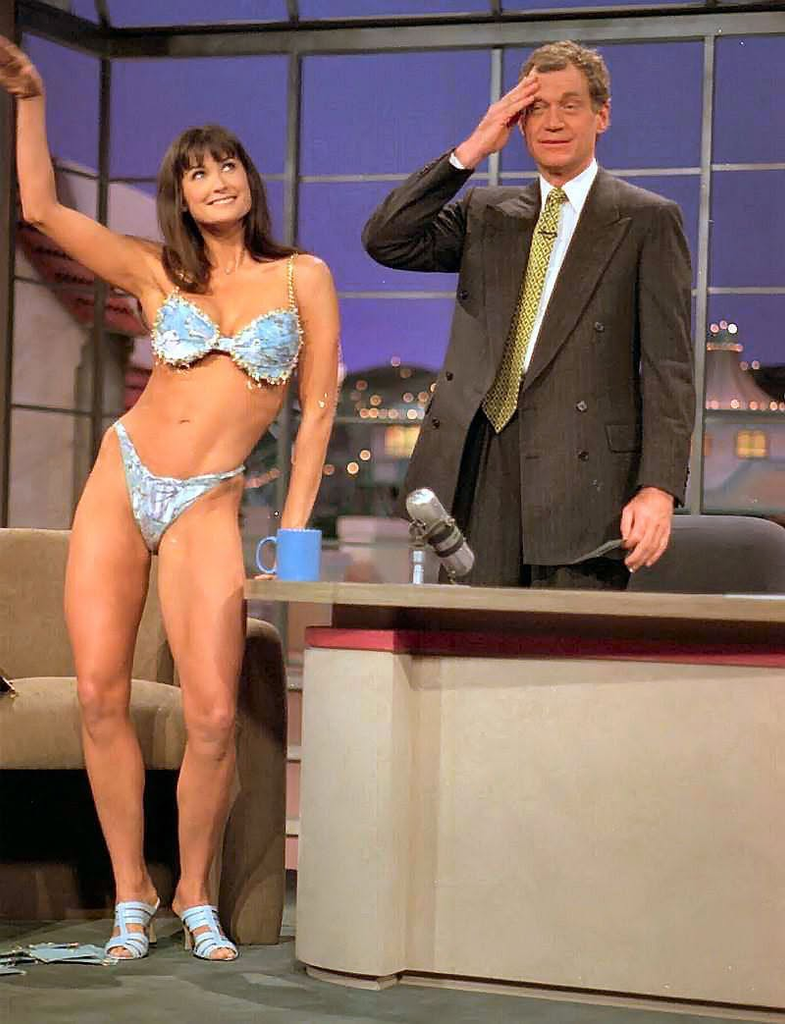
Like many performers who eventually become household names, Moore began by taking smaller opportunities and learning the business gradually.
One of her first major breaks came through daytime television.
General Hospital Introduced Demi Moore to American Viewers
In the early 1980s, Moore joined the cast of General Hospital.
It is difficult to overstate how important daytime dramas were during that period.
Long-running storylines became part of household routines, and viewers formed genuine attachments to characters they watched several afternoons each week.
For a young actress, appearing regularly on such a program could provide invaluable experience.
Moore learned how to work within demanding production schedules while reaching viewers across the country.
Before long, larger opportunities followed.
St. Elmo’s Fire Made Her Part of an Unforgettable 1980s Generation
The mid-1980s represented a particularly colorful chapter of American popular culture.
Shopping malls were gathering places. Music television shaped fashion. Cassette tapes filled glove compartments, and a new generation of young performers began appearing in movies about friendship, ambition, romance, and the confusing transition into adulthood.

Moore became closely associated with that era through St. Elmo’s Fire in 1985.
The ensemble film followed recent college graduates trying to understand what adulthood actually required of them.
They had dreams but little certainty.
They made questionable decisions.
They struggled with careers and relationships.
That messiness made the story recognizable to young audiences.
Moore brought emotional vulnerability to her role and demonstrated that there was considerable dramatic ability behind her increasingly glamorous public image.
She continued building momentum with projects including About Last Night…, strengthening her reputation as a performer who could move between romance, drama, and lighter material.
Ghost Turned Demi Moore Into an International Movie Star
Then came the movie that changed everything.
Ghost, released in 1990, became one of the defining romantic films of its era.
Moore portrayed Molly Jensen, a woman attempting to rebuild her life after an overwhelming personal loss.
Her short haircut quickly became one of the movie’s most recognizable visual details, but appearance was not what made the performance memorable.
It was the emotion.
Moore gave the character a quiet vulnerability that helped ground a story combining romance, mystery, humor, and supernatural element
Demi Moore Used Her Public Platform for a Larger Purpose

Moore’s work outside entertainment has included advocacy focused on protecting vulnerable children.
She helped establish the organization that became Thorn, which develops technology and resources designed to combat child exploitation and abuse.
That work exists far from movie premieres and fashion coverage.
It also illustrates how a public platform can evolve.
A recognizable name can sell movie tickets, but it can also draw attention toward issues that might otherwise struggle to reach a large audience.
For Moore, that became another chapter in a career increasingly defined by more than acting.
Conclusion: Demi Moore’s Real Legacy Is Her Ability to Keep Evolving
It would be easy to describe Demi Moore primarily through famous photographs, memorable hairstyles, or blockbuster movies.
Those things are certainly part of her story.
But they do not explain why audiences remain interested decades later.
Her journey stretches from daytime television and St. Elmo’s Fire to Ghost, major 1990s films, motherhood, writing, advocacy, and the remarkable critical recognition surrounding The Substance.
The woman remembered from those early Hollywood photographs is still part of who she is.
She simply has more chapters now.
That may be the most meaningful lesson in Demi Moore’s story.
Timelessness is not about remaining exactly as we once were.
It is about having enough courage to change, begin again, and discover that some of life’s most rewarding moments may still be waiting far beyond the chapter everyone remembers best.
Leave a Reply