Hollywood can make a star overnight and just as quickly turn its back on them.
For some actresses, promising careers were unfairly derailed by scandals, controversial comments, industry politics, or simply refusing to play by Hollywood’s rules.
Others found themselves caught in double standards that seemed to apply only to women. From an Oscar-winning star who found herself pushed aside to actresses who claim powerful figures quietly conspired to sabotage them, their stories reveal a darker side of the entertainment industry.
Some faced career setbacks after speaking out, while others struggled to recover from controversies that followed them for years.
Here are 11 prominent actresses whose career trajectories were disrupted, along with the circumstances surrounding their experiences.
Ashley Judd
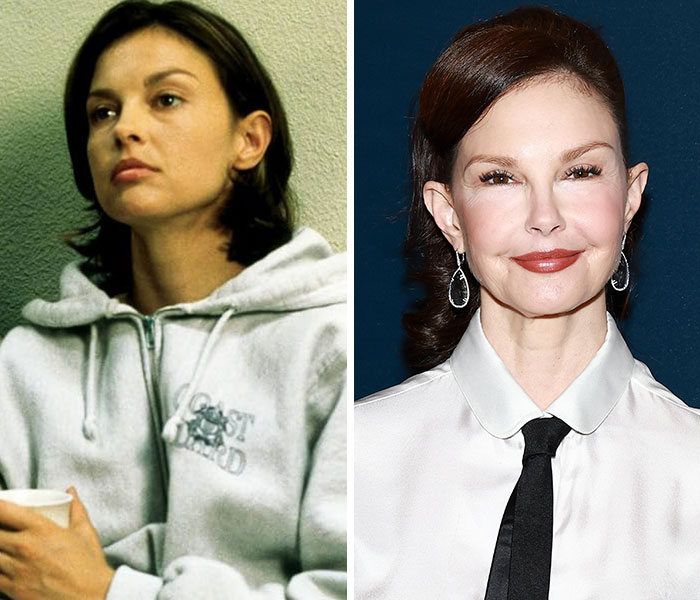
Ashley Judd made her acting debut with a guest role on Star Trek: The Next Generation in 1991 before landing her breakout role in Michael Mann’s Heat in 1995.
Over the next decade, Judd established herself as one of Hollywood’s most sought-after actresses, starring in hits including A Time to Kill (1996), Kiss the Girls (1997), and Double Jeopardy (1999).
However, her career momentum began to fade following the critical and commercial failure of the 2004 psychological thriller Twisted. Although Judd continued receiving acting offers, she was no longer a top choice for major studio productions.
“She was always one of my favorites! I wondered why (she) didn’t get as big as I expected!” one fan said of Judd’s change in fortune.
Judd would later accuse disgraced Hollywood producer Harvey Weinstein of sabotaging her career.
In a 2015 interview with Variety, she revealed that a famous producer had summoned her to his hotel room multiple times during the filming of Kiss the Girls, allegedly under the pretense of discussing movie roles.
“I was s**ually harassed by one of our industry’s most famous, admired-slash-reviled bosses,” she said.
In October 2017, Judd named Weinstein in a New York Times report before filing a lawsuit against him in April 2018. She accused the producer of sabotaging her career after she refused his s**ual advances.
Judd reportedly accused Weinstein of spreading “baseless smears” about her, which she said contributed to her losing a role in Peter Jackson’s The Lord of the Rings trilogy.
“I lost opportunity, I lost money, I lost status and prestige and power in my career as a direct result of having been s**ually harassed and rebuffing the s**ual harassment,” she said on Good Morning America in 2018.
While her specific lawsuit remained unresolved, Weinstein was arrested in May 2018 and convicted in February 2020.
Judd has largely shifted her focus from Hollywood to activism and politics. Her last prominent role came in the 2024 film Lazareth. However, she is poised to make a comeback with the upcoming indie film 21 Down.
Rose Mcgowan
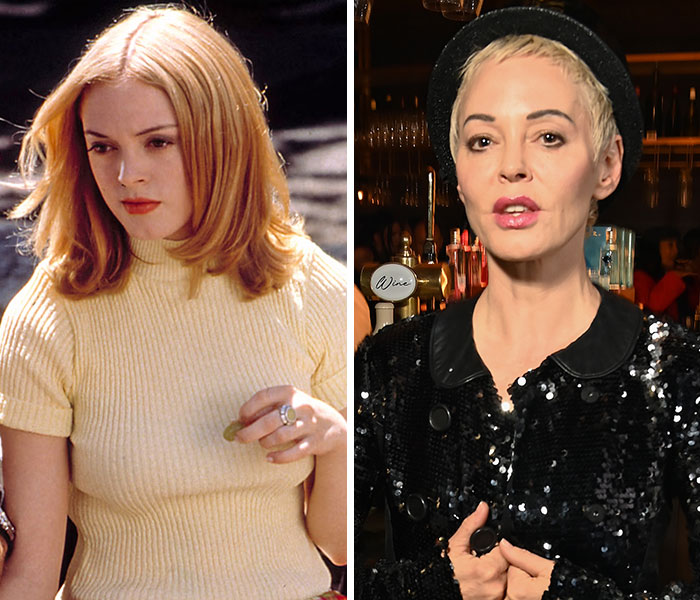
Although she had already been working in Hollywood for several years, Rose McGowan’s breakthrough came with the 1996 slasher Scream.
She spent the rest of the 1990s playing supporting roles before becoming a household name as Paige Matthews on Charmed in the early 2000s. McGowan joined the cast ahead of season 4 and appeared in 112 episodes until the show’s conclusion in 2006.
Despite her character’s popularity, McGowan admitted that filming the series was not always pleasant. In her memoir Brave, the actress revealed that she found the “repetitive” nature of filming a TV show ran counter to her “natural rhythms,” which led to her falling sick.
“It was at times a very stressful environment. I started to have panic attacks because of everything I was pushing down,” she wrote.
McGowan continued acting but mostly appeared in independent films over the following decade. However, acting opportunities soon dried up, something McGowan addressed in a 2015 interview with BuzzFeed.
McGowan revealed that her talent agency dropped her after she tweeted about a casting note for a film that she found offensive. In the same interview, McGowan said she had hoped to continue working in films but believed she had been blacklisted.
“Someone blacklisted me in the industry, and I couldn’t get a job in movies,” she said.
Although McGowan refrained from naming anyone, many speculated she was referring to Harvey Weinstein.
In October 2017, The New York Times reported that McGowan was among the women who had received a settlement from Weinstein over an alleged s**ual as**ult in 1997.
The same month, McGowan publicly named Weinstein in a series of tweets accusing the producer of as**ulting her. She also accused Amazon Studios of abandoning a script it had previously purchased after she reported Weinstein’s alleged misconduct.
“I called my attorney & said I want to get my script back, but before I could, #2 @amazonstudios called to say my show was de*d,” she tweeted.
By 2018, McGowan had stopped acting and instead focused on documentaries and activism.
In an interview with The Guardian, she explained that her view of the film industry had changed since she first rose to fame.
“That town is really built on sickness. Very early on I looked at the power structure, the figureheads, the silence, the closed ranks. Nobody tells. It operates like a cult,” she said.
In 2020, McGowan moved to Mexico and became a permanent resident the following year. She later said she had no plans to return to the United States.
Evan Rachel Wood
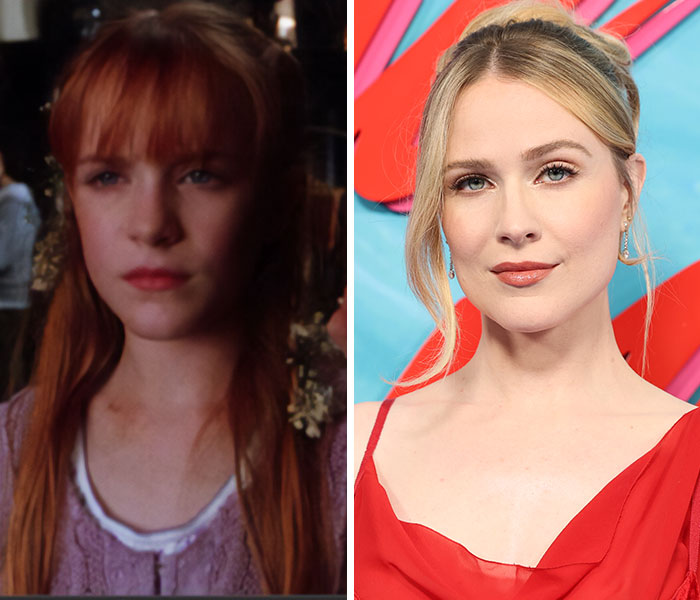
Evan Rachel Wood began her career as a child star, with 1997’s Practical Magic marking one of her earliest roles. She also gained recognition for roles in shows such as Once and Again and True Blood.
Wood rose to greater stardom with her career-defining role as Dolores Abernathy in the HBO sci-fi drama Westworld. The series aired from 2016 to 2022, with Wood earning two Emmy nominations for her performance.
During a 2016 interview to promote the series, Wood revealed that she had suffered physical, psychological, and s**ual ab*se in the past. While she did not name her ab*ser, the actress admitted she was as**ulted by a “significant other” while they were together.
“I don’t believe we live in a time where people can stay silent any longer. Not given the state our world is in with its blatant bigotry and sexism,” she told Rolling Stone.
Over the next few years, Wood remained vocal about her experiences, many of which echoed elements of her character’s story in Westworld.
It wasn’t until February 2021 that Wood publicly accused her former partner Marilyn Manson of grooming and ab*se, alleging that the behavior began when she was still a teenager.
“I was brainwashed and manipulated into submission. I am done living in fear of retaliation, slander, or blackmail,” she wrote in an Instagram post.
That same month, Wood said she had been threatened with the release of photographs that could ruin her career. However, no charges were filed against Manson.
In April 2026, Wood said she continued to face intimidation and harassment related to her allegations against the singer.
Despite the success of Westworld, Wood’s screen appearances have remained relatively limited in recent years.
Some have speculated that her allegations against Manson contributed to the downturn, particularly after Wood was not invited to reprise her role in Practical Magic 2.
One Reddit user argued that Wood was being “punished by Hollywood” over her allegations against Manson.
“It’s really obvious and messed up,” they added.
Geena Davis
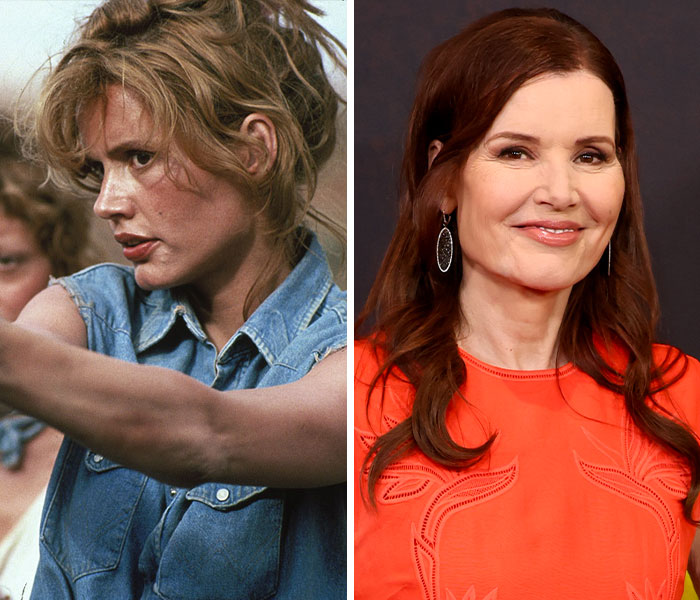
Geena Davis quickly emerged as a Hollywood star after making her film debut in Tootsie (1982), followed by commercial hits such as The Fly (1986) and Beetlejuice (1988).
By the end of the decade, she had already won a Best Supporting Actress Academy Award for the romantic drama The Accidental Tourist (1988).
Davis cemented her status as a leading lady with Thelma & Louise (1991), earning an Academy Award nomination for Best Actress. Over the next few years, she proved herself a bankable star until a string of poorly performing films significantly slowed her career momentum.
In 1995, Davis appeared in Cutthroat Island, an adventure film directed by her then-husband Renny Harlin. It was a critical and commercial failure, with reported losses of $147 million in inflation-adjusted terms.
In 1998, the film’s producer, Joel Michaels, attributed the box-office failure to a lack of audience interest in watching a female-led action film.
“I think the audience didn’t want to see a woman in a role that has traditionally been held by a man. What woman in the annals of film has been a consistent action star?” he said.
The film’s failure has often been cited as a factor in Davis’s career decline. Her next release, the 1996 thriller The Long Kiss Goodnight, was only a modest box-office performer and reinforced the perception that she was no longer a bankable star.
Davis, however, has disputed that explanation. Instead, she told The Times in 2022 that it had more to do with Hollywood’s treatment of actresses beyond 40.
“Comically, at 40. It was like I drove off a cliff. I’d heard about this very early on, this concept that after 40 the roles dry up. It didn’t worry me at all because I thought it wouldn’t happen to me,” she said.
During an appearance on the Allison Interviews podcast, Davis also discussed ageism in Hollywood. She revealed that she once lost a role after a leading man said she was too old to play his romantic interest, despite being 20 years younger.
Starting in 1996, Davis took a hiatus from acting and returned in 1999 with Stuart Little. Although she reprised her role in the film’s two sequels, Davis increasingly shifted her focus to television.
However, shows such as The Geena Davis Show and Commander in Chief were canceled after relatively short runs. Davis’s run of short-lived television projects has continued in recent years, with Netflix’s The Boroughs also being canceled after one season.
Sean Young
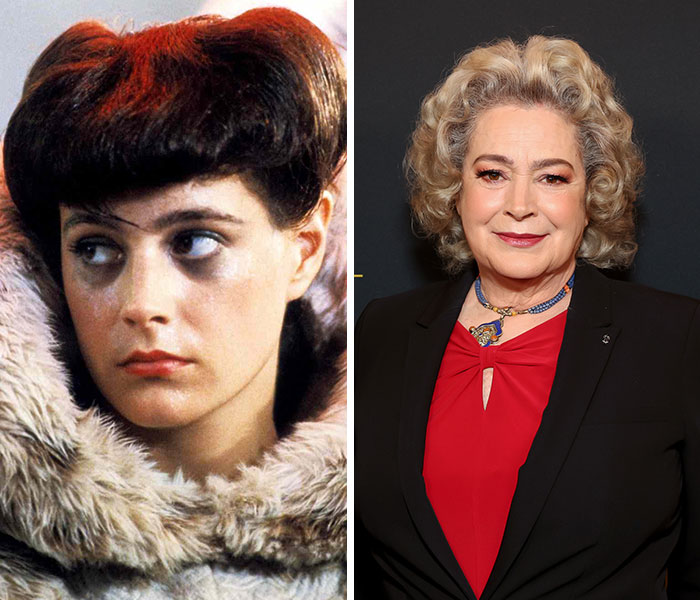
After her acting debut in 1980, Sean Young rose to fame as Rachel in the 1982 sci-fi film Blade Runner, opposite Harrison Ford.
Although she appeared poised for stardom, Young saw only moderate success with films such as No Way Out (1987) and Ace Ventura: Pet Detective (1994).
Her career was also marked by several missed opportunities, including her departure from Tim Burton’s Batman (1989) after an accident. By the 2000s, Young’s career had cooled, and she was appearing mostly in independent projects without returning to her early leading-lady status.
In a 2021 interview with The Daily Beast, Young claimed that her career was sabotaged by a handful of “powerful, terribly vindictive men.”
She alluded to a 1989 civil lawsuit filed against her by former co-star James Woods, claiming he had acted out of spite after she declined his romantic advances. Young made a similar claim about Blade Runner director Ridley Scott, alleging that he stopped hiring her after she refused to date him.
In the same interview, the actress spoke about clashes with director Oliver Stone and co-star Charlie Sheen.
“Ever since the movie business began, women have been treated as a commodity. There was always someone grabbing you, and I just ignored it,” she said.
She also recalled a 1992 incident involving Harvey Weinstein, claiming that she developed a bad reputation after rebuffing the producer. Young alleged that Weinstein exposed himself to her while they were working on Love Crimes.
“I’m really glad that I survived whatever I was going through as a famous actress in my 20s and early 30s,” she told People in 2023.
Leave a Reply